
Blown-In Insulation
Upgrade your home’s comfort and energy efficiency with professionally installed blown-in attic insulation that provides consistent thermal coverage.
- Reduce Heating & Cooling Costs
- Improve Year-Round Comfort
- Fill Gaps & Hard-to-Reach Spaces







Why Choose Attics.ca
for Blown-In Insulation?
Blown-in insulation helps reduce heat transfer through your attic by creating a consistent layer of thermal protection. Attics.ca assesses your existing insulation, ventilation, and attic conditions before recommending an appropriate upgrade.
- Professional Attic Assessments
We inspect insulation depth, existing materials, ventilation baffles, and moisture concerns before recommending installation.
- Cellulose & Fiberglass Options
Loose-fill cellulose and fiberglass offer effective thermal resistance, with material selection based on your attic’s requirements.
- Consistent Installation Coverage
Our installation process distributes insulation around ceiling joists, wiring, ductwork, and hard-to-reach areas.

5 Highlights
Benefits of Blown-In Attic Insulation
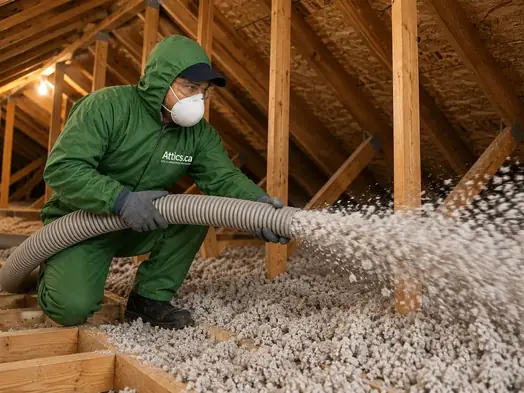
Blown-in insulation uses specialized equipment to distribute loose-fill insulation across attic floors and irregular spaces. Proper coverage and insulation depth help reduce heat loss, improve indoor comfort, and support energy efficiency.
Improved Thermal Resistance
Complete Attic Coverage
Lower Energy Consumption
Recycled Insulation Materials
Improved Sound Reduction


Warning Signs
Signs You Need Blown-In Insulation
Insufficient or uneven attic insulation can contribute to heat loss, uncomfortable rooms, and increased energy consumption. An attic inspection helps determine if additional insulation, removal, or ventilation improvements are required.
Rising Energy Bills
Uneven Room Temperatures
Visible Insulation Gaps
Drafts & Cold Spots
Moisture & Ice Dams

What Homeowners Say About Attics.ca
See what homeowners have to say about our attic insulation services, professional installations, and commitment to improving home comfort.

Aiden was an extremely professional and personal attic inspector. He went over my attic thoroughly and gave me extreme detail to the attic report. I highly recommend top… Aiden was an extremely professional and personal attic inspector. He went over my attic thoroughly and gave me extreme detail to the attic report. I highly recommend top trade insulation. And I recommend them to anyone who wants a professional and thorough investigation done properly


Finished ahead of schedule and very friendly team. Worked with me on meeting my budget with their quote. When a mistake was found (stuff happens!) Hamed was incredibly… Finished ahead of schedule and very friendly team. Worked with me on meeting my budget with their quote. When a mistake was found (stuff happens!) Hamed was incredibly easy to work with to correct it. This company really takes pride in their work. Shout out to Orlando who was excellent!

The team did an excellent job removing mold and installing 2 solar fans in attic !!

Excellent, fast, professional service. I received a quick call back, consult and then remediation. This is exceptional in today’s world, where we are used to long wait times… Excellent, fast, professional service. I received a quick call back, consult and then remediation. This is exceptional in today’s world, where we are used to long wait times for work to be done!

Customer service was excellent at all times, from initial on site inspection and job estimate, to all the work performed by their crew. I would highly recommend Top… Customer service was excellent at all times, from initial on site inspection and job estimate, to all the work performed by their crew. I would highly recommend Top Trade Insulation on Vancouver Island for your insulation and attic needs.

Presented as fast and efficient. Cleaned up after they finished the job .
Our Process
Our Blown-In Insulation Installation Process
Every attic requires the right combination of insulation coverage, ventilation, and preparation. Our process starts with an assessment and finishes with a review of the completed insulation installation.
01
Attic Inspection
We assess existing insulation, R-value, attic access, moisture conditions, and ventilation requirements.
02
Attic Preparation
We identify insulation removal needs, air leakage, and ventilation baffles before installation.
03
Insulation Installation
Specialized blowing equipment distributes loose-fill cellulose or fiberglass to the specified insulation depth.
04
Final Inspection
We review insulation coverage, installed depth, ventilation clearance, and the completed work area.
Blown-In Insulation Materials & Attic Components
Effective attic insulation depends on suitable materials and properly prepared building components. Understanding the products and systems involved helps homeowners make informed decisions about insulation upgrades.
Blown-In Cellulose Insulation
Loose-fill insulation manufactured from recycled paper fibres and treated with fire-retardant additives.
Loose-Fill Fiberglass Insulation
Glass-fibre insulation distributed using specialized blowing equipment to provide attic thermal coverage.
Recycled Paper Fibres
The primary raw material used to manufacture cellulose insulation for attic and wall applications.
Borate Fire Retardants
Additives used in certain cellulose insulation products to improve fire, mould, and pest resistance.
Insulation R-Value
A measurement of thermal resistance used to determine the insulating performance of materials and assemblies.
Insulation Blowing Equipment
Specialized machinery and hoses used to distribute loose-fill insulation across attic floors and cavities.
Ventilation Baffles
Components installed near soffit vents to help maintain airflow above attic insulation.
Air Barriers
Building components and sealed penetrations that help limit uncontrolled air movement through ceiling assemblies.
Vapour Barriers
Materials used within building assemblies to help control water vapour movement.
Insulation Removal Equipment
Specialized vacuum systems used to remove damaged, contaminated, or unsuitable existing insulation.
Frequently Asked Questions
Blown-In Insulation FAQs
Learn how blown-in insulation works, which materials are available, and what to expect from an attic insulation upgrade.
What is blown-in insulation?
Blown-in insulation is loose-fill cellulose or fiberglass distributed into attics and building cavities using specialized equipment. It conforms around framing, wiring, and irregular spaces to provide consistent thermal coverage.
What is the difference between cellulose and fiberglass blown-in insulation?
Cellulose insulation is made primarily from recycled paper fibres, while fiberglass insulation is manufactured from glass fibres. Both provide thermal resistance, but their density, material composition, and installation requirements differ.
How much blown-in insulation does an attic need?
The required insulation depth depends on the material’s R-value per inch and the target R-value for the attic. An inspection determines the existing insulation level and the additional depth needed.
Can blown-in insulation be added over existing insulation?
Yes, blown-in insulation can often be installed over existing material that is dry, clean, and in suitable condition. Wet, mould-contaminated, or pest-damaged insulation may require removal before an upgrade.
Does blown-in insulation reduce heating and cooling costs?
Yes, properly installed blown-in insulation can reduce heating and cooling demand by limiting heat transfer through the attic. Actual savings depend on existing insulation, air leakage, building conditions, and energy use.
Is blown-in cellulose insulation fire resistant?
Yes, cellulose insulation is treated with fire-retardant additives to improve its fire resistance. The level of protection depends on the specific product and its tested performance.
Can blown-in insulation help reduce noise?
Yes, cellulose and fiberglass insulation can help reduce sound transmission through insulated ceiling and wall assemblies. Sound reduction depends on material density, installation, and the surrounding building assembly.
Will blown-in insulation prevent attic condensation?
No, blown-in insulation alone does not eliminate condensation caused by moisture movement, air leakage, or inadequate ventilation. Air sealing and ventilation issues should be assessed alongside insulation upgrades.
How is blown-in insulation installed?
Installers use a blowing machine and hose to distribute cellulose or fiberglass across attic floors and around obstructions. Material is installed to a specified depth to achieve the required settled R-value.
How long does blown-in insulation last?
Properly installed blown-in insulation can provide thermal resistance for many years when it remains dry and undisturbed. Moisture damage, contamination, and material settling can affect performance and may require corrective work.
Ready to Improve Your Home’s Comfort?
Improve thermal performance, reduce heat loss, and upgrade your attic with professional blown-in insulation from Attics.ca.