When it comes to making your home comfortable, energy-efficient, and cost-effective, insulation plays a pivotal role. Among the various insulation options available, blown-in attic insulation has emerged as a top choice for many homeowners. This guide explains how blown-in insulation works, how much a Vancouver Island attic needs, how rebates are calculated, and what a safe installation looks like.
Understanding Blown-In Insulation
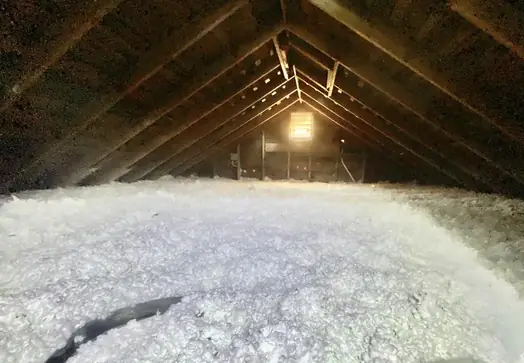
Blown-in insulation, also known as loose-fill insulation, is installed by blowing loose, fiber-like material into a space. The material flows around wiring, pipes and framing, so it fills gaps and cavities that other products leave open. That gives strong thermal resistance and reduces energy consumption, which is why blown-in insulation is often the very best choice for attics.
Two materials cover most attic jobs. Cellulose delivers about R-3.2 per inch, and loose-fill fiberglass delivers about R-2 to R-2.7 per inch. Cellulose is denser and slows air leakage better, but it can settle over time, by up to roughly 20% in some attics according to Fine Homebuilding. Fiberglass holds its depth unless it is disturbed. Either product performs well when it is installed to the right depth, so ask for the settled depth and R-value in writing, not just the depth blown in on day one.
| Material | R-value per inch | Settling | Air leakage |
|---|---|---|---|
| Blown-in cellulose | About R-3.2 | Can settle, up to about 20% | Denser, slows air leakage better |
| Loose-fill fiberglass | About R-2 to R-2.7 | Holds its depth unless disturbed | More air-permeable |
How Much Insulation Does a Vancouver Island Attic Need?
Better Homes BC lists R40 as the minimum attic insulation for new homes in climate zone 4, which covers southern Vancouver Island and the Lower Mainland, and R50 in climate zone 5 in central BC. It describes a well-insulated attic as R40 to R60, depending on where you live and how efficient you want the home to be.
At about R-3.2 per inch, that range works out to roughly 12 to 19 inches of settled cellulose. Many older homes have far less, and insulation compresses and gets pushed aside over decades. A quick check: if the insulation sits level with or below the tops of your ceiling joists, you are almost certainly under R40, because 2x6 joists are only 5.5 inches deep.
Expertise and Safe Installation
Attics.ca has garnered a reputation for being an expert in blown-in insulation. With years of experience in the industry and home construction, our team of professionals understands the ins and outs of blown-in insulation, ensuring that every installation is done with precision. We know how to target key areas in the attic for maximum effectiveness. Safety is another key factor to consider, as nobody wants a worker falling through their ceiling. Every step in your attic is important!
Preparation decides how well the insulation performs. Before any insulation goes in, a careful installer:
- Seals air leaks around wiring holes, plumbing stacks and the tops of walls, so warm indoor air cannot flow up into the new insulation.
- Installs rigid baffles at the soffits to keep a clear channel for ventilation. Building science guidance calls for a channel at least 2 inches deep, and flimsy baffles can collapse when insulation is blown over them.
- Keeps insulation away from recessed lights that are not rated for insulation contact, because non-IC fixtures create a fire risk when insulation touches them.
- Places depth markers through the attic so the finished depth can be checked at a glance.
Cost, Rebates and Savings
One of the primary reasons homeowners choose blown-in insulation is its cost-effectiveness. The installation process is efficient, which saves time and labour costs, and Attics.ca offers competitive pricing for homeowners who want to improve their home's energy efficiency.
Rebates can cut the cost further. Better Homes BC calculates insulation rebates from the R-value you add and the square feet you cover, not from the final combined R-value. The work must be done by a registerd contractor, and your invoice has to show the location of the work, the starting R-value, the final R-value and the square feet added. Ask for that detail on any quote you collect, and we also provide guidance with rebates to help reduce your costs.
Energy Savings, Comfort and Environmental Benefits
Blown-in insulation creates a thermal barrier that keeps your home cool in the summer and warm in the winter. By preventing heat transfer through the attic, it reduces the need for heating and cooling and leads to long-term savings on utility bills.
Comfort improves too. Insulation creates a barrier against drafts, moisture and outdoor pollutants, and a well-insulated attic keeps upstairs rooms closer to the temperature of the rest of the house. Insulation works best alongside airflow, so an attic that holds damp air needs attic ventilation fixed as well, otherwise moisture gathers in the new insulation. Many blown-in products also contain recycled content, which reduces waste and the overall environmental impact.
Where Blown-In Insulation Works Best
Blown-in insulation is versatile and can be applied to attics and hard-to-reach spaces alike. Whether you are retrofitting an existing home or insulating new construction, it can be tailored to the shape of the space. It also suits older homes, because the work happens in the attic without opening your ceilings, and in most homes the hose runs in through the hatch, so rooms below stay undisturbed. Many jobs finish in a day, so the installation causes little disruption to daily life.
The attic hatch is the weak point many homeowners forget. A bare plywood lid leaks heat straight past the new insulation, which is why we also offer attic hatch services to seal and insulate it. If the existing insulation is wet, matted or contaminated, insulation removal comes first.
No-Charge Attic Inspections
We provide no-charge attic inspections because attic insulation efficiency is not just about having enough insulation. Attics need insulation, circulation, ventilation and moisture control working together. We also check for leaks, mold staining, holes, and improper seals and taping, because adding more insulation without addressing those concerns leads to new problems. We complete the inspection safely, watching every step and letting you stay inside your home and off the ladder and trusses where most accidents occur. We take many photos of the complete inspection so you can see with your own eyes how things look up in the darkness.
Get Connected With Our Insulation Experts
In the realm of insulation, blown-in insulation has proven itself as a reliable and cost-effective solution for homeowners. With a commitment to quality, efficiency and safety, we have earned a reputation as best choice on Vancouver Island. If you do not know how things look in your attic, ask for a no-charge attic inspection.
Visit Attics.ca to see everything we do, or call (833) 422-8842 to talk with our insulation experts. We reply to calls and form requests Monday to Friday, 8:00 am to 4:30 pm, and every free inspection starts with a visit to your attic or crawl space.