
Nobody spends time in the attic, which is exactly why problems there go unnoticed for years. On the BC coast the attic sits between a heated home and a damp, mild climate, so moisture is the main threat, with summer heat second. This guide explains why attic ventilation matters, where the moisture comes from, how frost and ice dams form, which exhausts must never end in the attic, and an inspection checklist you can follow.
Why Attic Air Movement Matters on the Coast
We put fans in bathrooms to move humidity outside before it grows mold. The attic needs the same thing, with less atention. It is meant to stay dry and close to outdoor temperature: cold in winter, hot in summer. Moisture that gets in has to leave, and moving air is how it leaves.
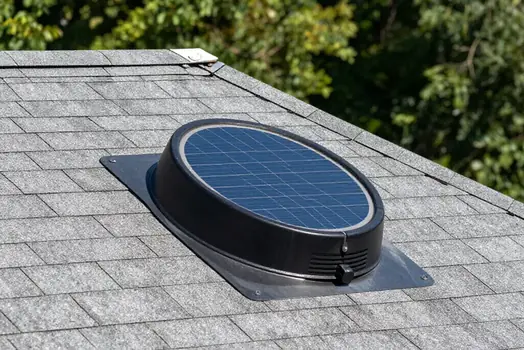
Most homes use passive ventilation: air enters at the soffits and leaves through ridge, gable or roof vents. On Vancouver Island, where fall and winter are long and damp, that passive flow is sometimes not enough, and an active fan may be discussed. Our guide to active ventilation covers the trade-offs.
Where Attic Moisture Really Comes From
Roof leaks are easy to spot. The bigger source is quieter: warm indoor air rising into the attic. Jon Eakes, a Canadian building-science writer, notes that exterior water rarely causes the problem. Warm air leaking from the house deposits its moisture when it meets the cold roof, often before it reaches a vent.
The usual leak paths are light fixtures, plumbing and electrical holes, gaps at the tops of interior walls and a poorly sealed attic hatch. Sealing those gaps does more than any extra vent, which is why an inspection checks the ceiling as well as the roof.
Winter Frost and Condensation
On a cold night, moist air reaching the underside of the roof deck freezes into frost on the nails and sheathing. When the sun or a mild spell warms it, the frost melts and drips onto the insulation, then dries and refreezes in a loop that darkens wood and wets insulation.
Eakes points out that ventilation removes little moisture while the attic is below freezing, because the moisture is ice and passing air will not carry it off. The practical answer is to find the leaks below frost clusters and seal them. Frost that appears and disappears with the weather is a leak signal, not a ventilation signal on its own.
Roof Deck, Shingles and Summer Heat
On a hot, sunny day an attic can get far hotter than the air outside. That heat soaks into the top floor and loads the roof covering. Before a re-roof, read the shingle manufacturer's warranty for any ventilation requirements and ask your roofer how the new roof will meet them.
Be honest about limits, though. Some research suggests ventilation has a small effect on shingle temperature compared with colour and orientation. Treat ventilation as one part of a dry, sealed, well-insulated attic, not a cure on its own.
Ice Dams, Blocked Soffits and Baffles
Ice dams form when heat leaking from the house melts the snow on the roof, and the water refreezes at the cold eave. They are more of a concern in the snowier parts of the Island and at higher elevations than on the milder south coast. The purpose of winter ventilation, per Eakes, is to keep the roof deck cold so snow stays frozen.
That only works if the air can enter. Blown or batt insulation pushed into the eaves is a common block. Baffles (rigid channels at each rafter bay) hold insulation back and leave a clear path. The BC Building Code asks for at least 63 mm between the top of the insulation and the roof sheathing, per the BC Building Code Part 9 text. If soffits are blocked, our attic ventilation service clears them and adds baffles.
Exhausts That Must Not Vent Into the Attic
Several household vents are sometimes found ending in an attic. All of them should go outdoors through the wall or roof:
- Bathroom fans. Health Canada advises venting to the outdoors, not the attic, and running the fan during and for at least 30 minutes after a shower.
- Kitchen range hoods. Grease and steam do not belong in insulation.
- Clothes dryers. A dryer vents a lot of water every load.
Ending a duct just outside a soffit vent is not a fix. Because soffits are the intake, much of that moist air is drawn right back in. Read Health Canada's moisture and mould guide for the humidity target of 30 to 50 percent indoors.
Signs of Poor Ventilation and an Inspection Checklist
Take a flashlight, stay on the ladder or have us go up. Look for these signs:
| Sign | Likely cause | What to check |
|---|---|---|
| Frost on nails or sheathing | Warm air leaking up | Ceiling gaps, hatch |
| Dark staining on the roof deck | Repeated damp | Soffits, exhaust ducts |
| Damp or matted insulation | Condensation or a leak | Duct ends, flashing |
| Rusted nail tips | Long-term condensation | Intake and exhaust vents |
| Hot top floor in summer | Low airflow or thin insulation | Vent area, insulation depth |
| Icicles and ice at the eaves | Heat loss at the ceiling | Air sealing, baffles |
Also confirm that every duct ends outdoors, that soffit openings are visible from inside, and that the hatch seals tight. If you see staining or fuzzy growth, read our attic mold guide.
Get Connected With Our Insulation Experts
Attics.ca offers no-charge attic inspections where the team inspects, takes photos and explains findings, and stays safe so you can stay off the ladder. We can show you whether your attic has blocked soffits, a duct ending in the wrong place or thin insulation, and what your options and rebates are.
Visit Attics.ca to see everything we do, or call (833) 422-8842 to talk with our insulation experts. We reply to calls and form requests Monday to Friday, 8:00 am to 4:30 pm, and every free inspection starts with a visit to your attic or crawl space.