Old attic insulation does not always need to come out, but wet, contaminated or suspect material does. Pulling out the wrong product, or leaving in the wrong one, costs money and can put your health at risk. This guide covers when insulation should stay and when it should go, what to ask about contamination, moisture and older materials, how safe removal and disposal work in BC, and how replacing attic insulation at the right R-value works, with rebates in mind.
When Old Insulation Can Stay and When It Must Come Out
Insulation that is dry, clean and simply thin can usually stay, with new attic insulation added on top. Age alone is not a reason to remove it. The original article on this topic suggested looking at insulation that is 15 to 20 years old, and that is a fair prompt to inspect it, but condition matters more than the calendar.
Removal makes sense when the material has stopped doing its job or has become a health or building problem:
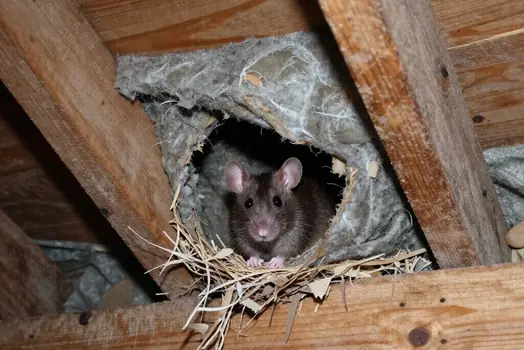
- Pest damage: nests, droppings and urine-soaked insulation, which spread contamination into your living space.
- Moisture or mold: wet, matted or stained material from roof leaks or condensation.
- Compressed or settled insulation that no longer holds its depth.
- Uneven temperatures or rising energy bills that point to gaps or missing coverage.
- Older materials you cannot identify, especially in homes built before 1990.
Questions to Ask About Contamination, Damage and Moisture
Before anyone quotes a price, get clear answers to these questions. A proper inspection should settle each one with photos.
| Question | What to look for | Likely result |
|---|---|---|
| Is it wet or stained? | Dark patches, matting, damp smell | Remove, fix the leak first |
| Are there pests? | Droppings, nests, tunnels | Remove, treat, then replace |
| Is there mold? | Black or green growth on wood | Treat, then remove if affected |
| Is it only thin? | Level with the joists, but clean | Keep, add more on top |
| Do I know the material? | Pre-1990 home, unidentified loose fill | Test before touching |
Moisture deserves extra attention. New insulation placed over a wet attic traps the problem. If the cause is poor airflow, attic ventilation needs fixing at the same time, and mold on the wood may need mold stain removal before anything new goes in.
Asbestos-Era Materials and Testing Before Removal
Vermiculite insulation is the main concern in attics. Health Canada notes that Zonolite vermiculite came from the Libby Mine in Montana, was sold from the 1920s to 1990, and may contain asbestos. Its advisory says there is no evidence of a health risk while it stays sealed and undisturbed, and the best way to limit exposure is to avoid disturbing it at all.
In BC, WorkSafeBC says homeowners must have their homes tested for asbestos before renovation or demolition work, and that asbestos-containing materials appear in more than 3,000 pre-1990s building products, insulation among them. If you have unidentified loose-fill insulation in an older home, stay out of the attic and ask a professional about testing. If asbestos is confirmed, the work needs a qualified abatement contractor, not a general insulation crew.
Safe Removal and Disposal in BC
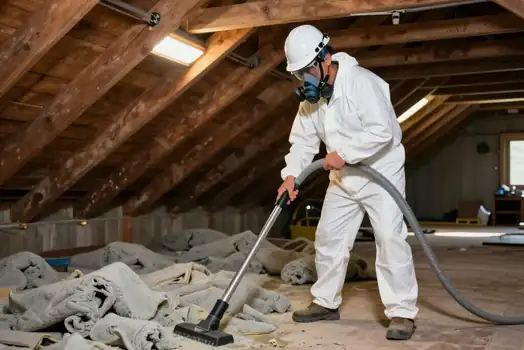
Once tetsing and the inspection are done, removing insulation from the attic follows a set order. Crews wear gloves, goggles and a properly fitted particulate respirator, because old insulation releases fibres and dust that you should not breathe.
- Treat any pest problem first, so you are not removing insulation around live animals.
- Cover the hatch opening and protect the rooms below from dust.
- Remove the material by commercial vacuum with a HEPA filter, or by hand into heavy bags, depending on the product.
- Bag and carry debris out without dragging open bags through the house.
- Dispose of it as your regional district allows. Ask the contractor where it goes, since landfill rules differ across Vancouver Island.
The attic itself is a hazard. Nails come through the roof sheathing near your head, lighting is poor, and a misplaced step on a ceiling drywall can drop you into the room below. That is why we keep homeowners off the ladder. Our crews handle insulation removal in Victoria, Nanaimo, the Cowichan Valley and north to Campbell River. See how our insulation removal service works.
Attic Insulation Replacement and the Right R-Value
Attic insulation replacement starts once the old layer is out and the attic is clean. If you are wondering how to replace attic insulation properly, the order is the same on every job: seal the air leaks the old material was hiding, install baffles at the soffits, then blow new insulation to a measured depth. The next section covers that preparation. The target R-value comes first.
Better Homes BC lists R40 as the minimum attic insulation for new homes in climate zone 4, which covers southern Vancouver Island and the Lower Mainland, and describes a well-insulated attic as R40 to R60. Fine Homebuilding puts cellulose at about R-3.2 per inch, so R50 is roughly 16 inches of settled depth.
Ask the contractor for the settled depth and final R-value in writing, not just the depth blown in on day one.
Preparing the Cleared Attic Before New Insulation
A bare, freshly cleared attic is the best moment to fix what insulation was hiding. Insulation placed over air leaks performs below its rating, so a careful installer:
- Seals air leaks around wiring holes, plumbing stacks and the tops of walls.
- Installs rigid baffles at the soffits to keep a ventilation channel clear. Building science guidance calls for a channel at least 2 inches deep.
- Keeps insulation away from recessed lights not rated for insulation contact, which are a fire risk. Ask an electrician if you are unsure of your fixtures.
- Insulates and seals the hatch with an insulated hatch cover, since a bare lid leaks heat past the new layer.
- Places depth markers so the finished depth can be checked at a glance.
Rebates for Removal and Replacement
Better Homes BC says new insulation must be installed by a program-registered contractor to qualify. It works out insulation rebates from the R-value you add and the area you cover, not from the final combined R-value. See the Better Homes BC insulation rebates page.
Programs, amounts and income limits change, so confirm current terms and eligibility with Better Homes BC before you sign, including whether removal is covered. Ask your contractor for an invoice that lists the work location, starting R-value, final R-value and square feet added.
Get Connected With Our Insulation Experts
A no-charge attic inspection tells you whether your insulation can stay, needs partial removal or has to come out entirely. We inspect, take photos and explain what we find, and we stay in the attic so you do not have to. We also guide you through the government rebate paperwork.
Visit Attics.ca to see everything we do, or call (833) 422-8842 to talk with our insulation experts. We reply to calls and form requests Monday to Friday, 8:00 am to 4:30 pm, and every free inspection starts with a visit to your attic or crawl space.